

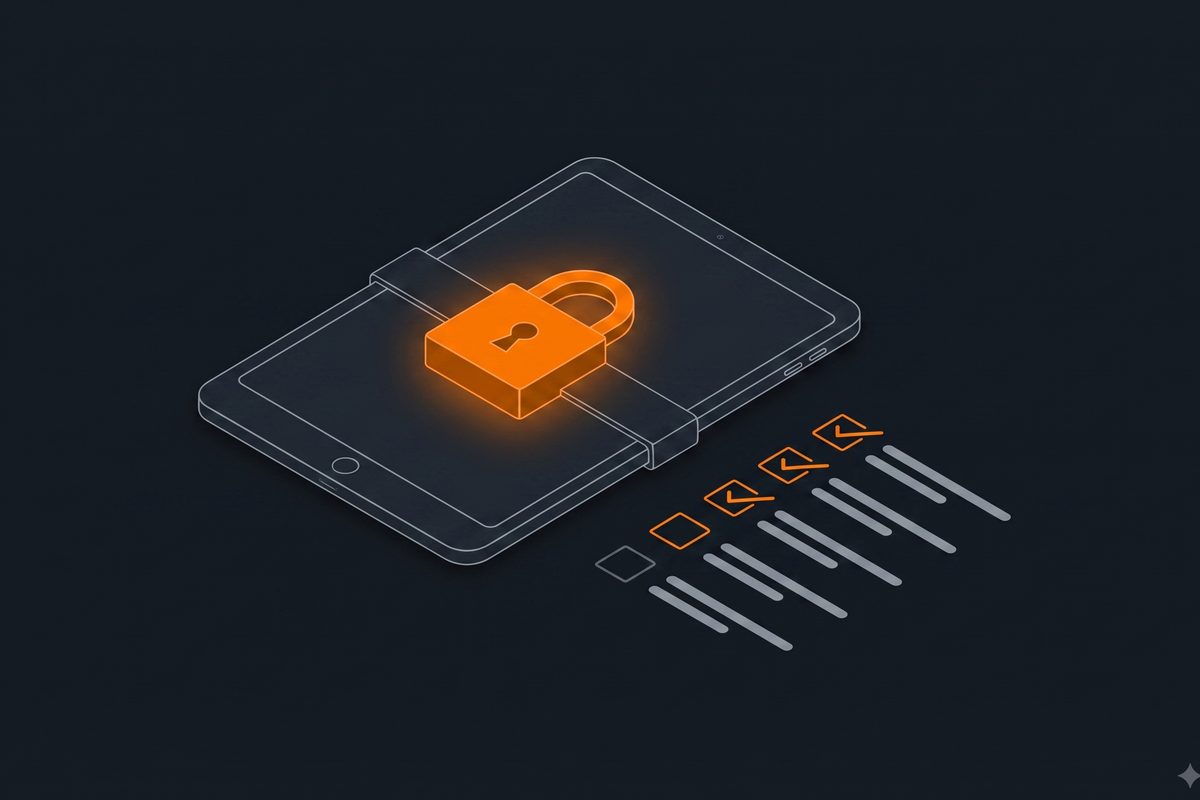
No VPN tricks. No workarounds. OS-enforced.
We built a parental-control iOS app that ties device access directly to verified chore completion — enforced natively at the iOS operating system level using Screen Time and Family Sharing APIs, with no VPN profiles or network tricks that children can bypass.
Photo verification, three-tier parental trust and OS-level enforcement make this a parental control mechanism that works because of how the OS works, not in spite of it.
Parental control apps relied on VPN tricks. Kids bypassed them within days.
Third-party parental control apps used VPN profiles or network-level filtering to enforce their restrictions — mechanisms that technically-curious children found ways around within days of setup. The tools parents trusted were being defeated by the children they were designed to protect.
The deeper problem was conceptual: existing apps just blocked or allowed. None of them connected screen time to responsibility — creating a system where children had no agency, and parents had no mechanism to reward it.
Native iOS APIs. Photo-verified chores. Three-tier parental trust. OS-level enforcement.
Native iOS Screen Time APIs
Built entirely on the OS's own Screen Time and Family Sharing frameworks in Swift — so the restrictions are enforced by the operating system itself, with no separate app or VPN profile that can be removed.
Photo-Verified Chore Completion
Children submit photo proof of completed chores for parental review — providing a concrete, verifiable record rather than a self-report.
Three-Tier Parental Trust System
Parents configure trust levels for each child — controlling which apps unlock for which chore completions, with graduated independence as children demonstrate responsibility.
App Blocking & Web Protection
Full app-level blocking and web content protection managed through the OS — with no separate filter to install, no profile to delete and no VPN to bypass.
OS-enforced. Zero workarounds. Screen time becomes earned, not given.
Profiles or Network Tricks
Enforcement is native to the operating system — there is no separate mechanism for children to find and remove.
Verification on Every Chore
Visual proof of completion required before any screen time unlocks — parent-reviewed, not self-reported.
Enforcement
Restrictions enforced by the OS's own Screen Time APIs — the same mechanism the platform uses for its own family controls.